

Zula Lab’s Prosthetic Hand
A 3D-printed robotic hand — my ongoing project to build a working prosthetic from the ground up.
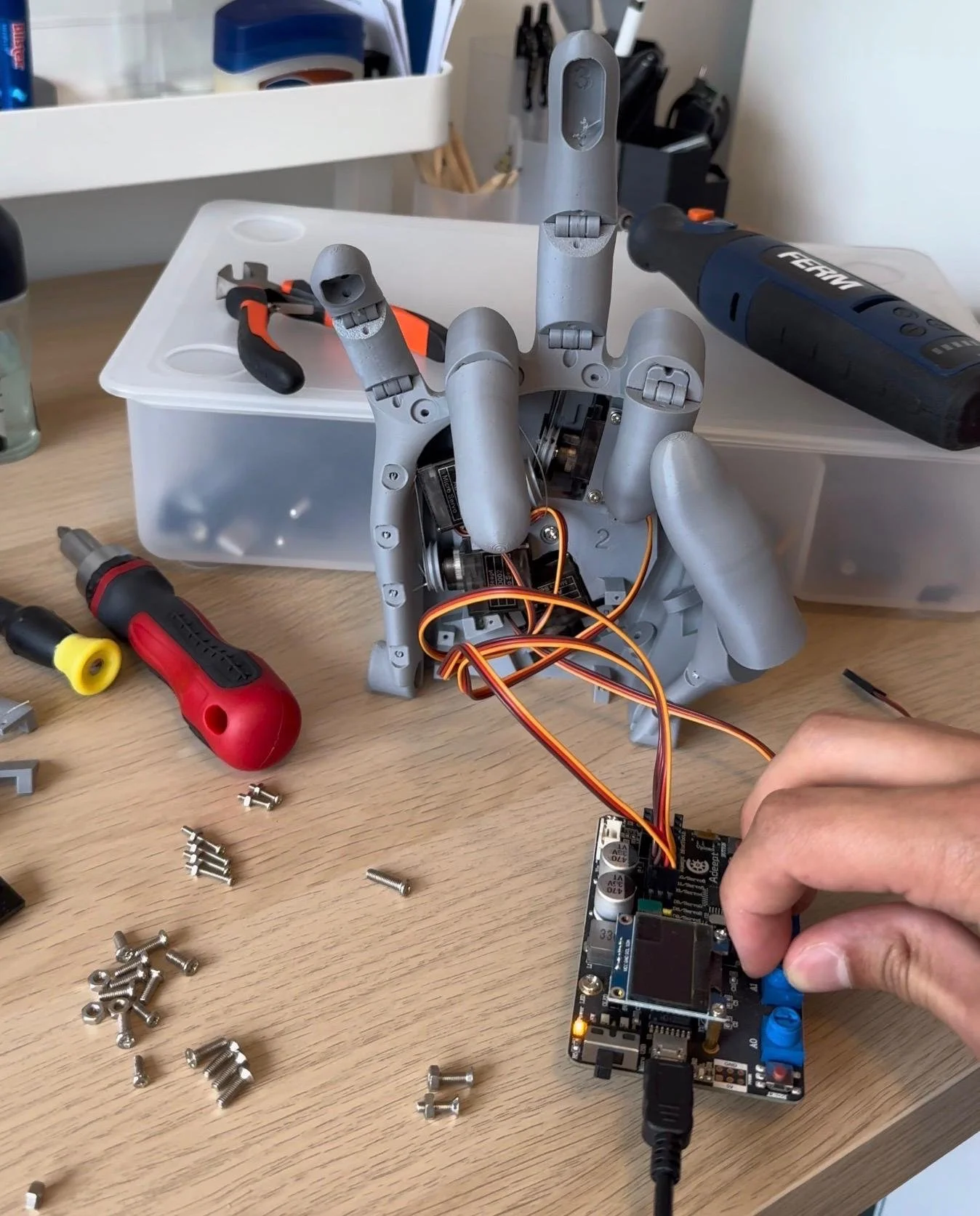
I've always been drawn to how the human body solves mechanical problems — and the hand is one of the most elegant. This project is my attempt to understand it by rebuilding it: a robotic hand, designed and 3D-printed at home, that turns a pile of prints and motors into something that actually grips.
January 2025 - Present
How it works?
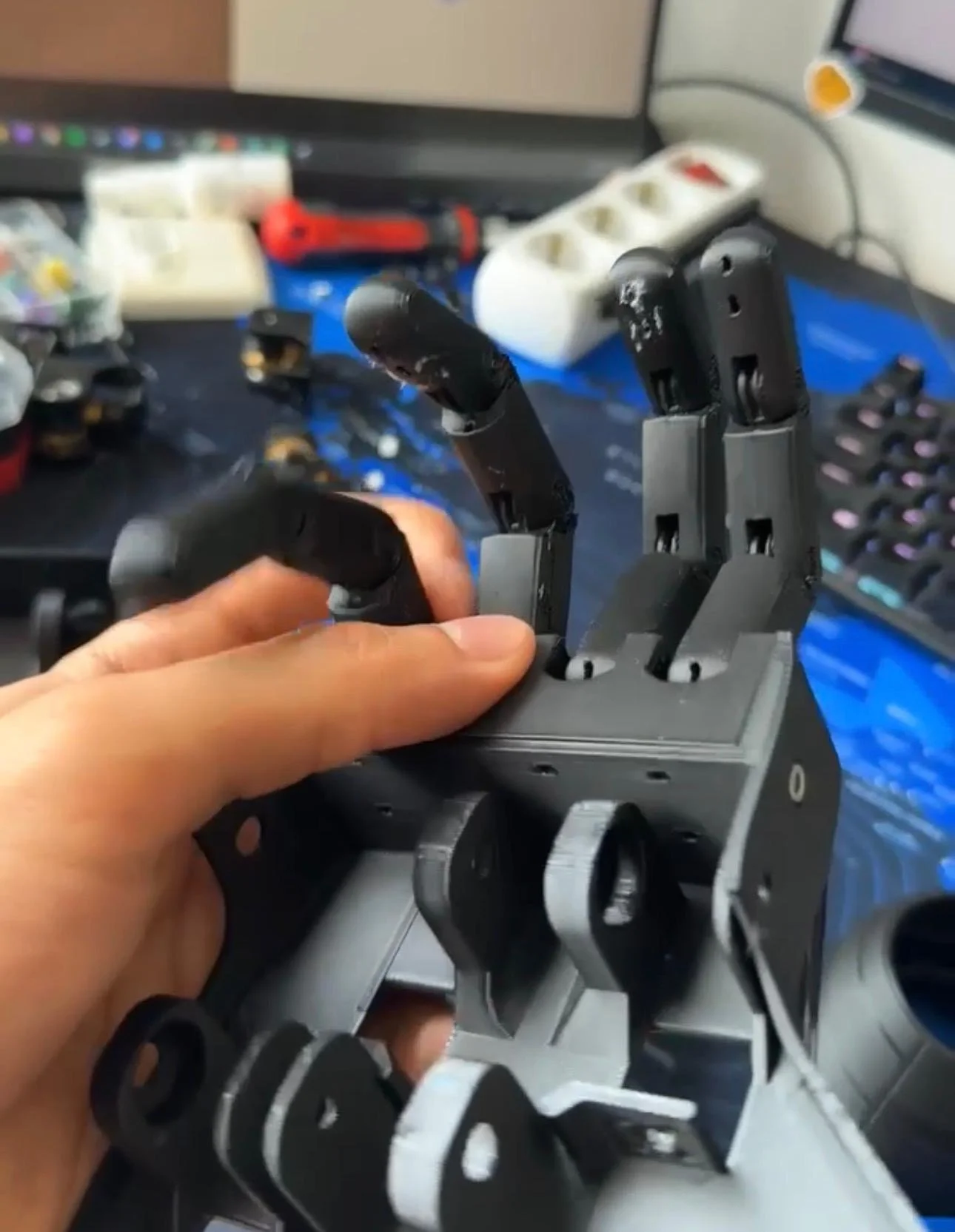
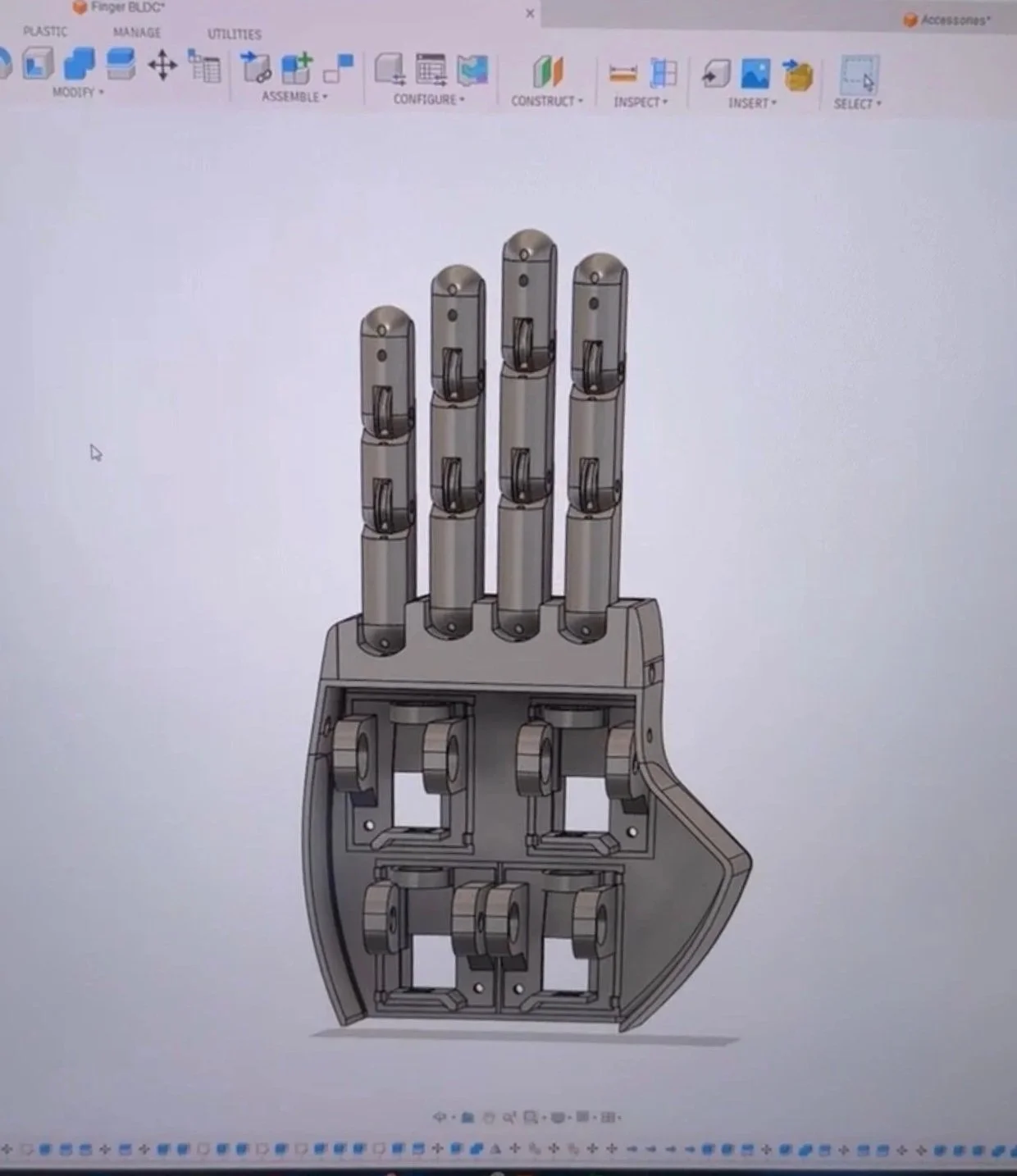
The Fingers
All the fingers prints as a single pre-articulated piece — bends straight off the bed, no assembly, no pins.
Joints printed in place with a set clearance gap so they flex instead of fusing.
Whole design hinges on print tolerance: too tight and joints weld shut, too loose and they go sloppy.
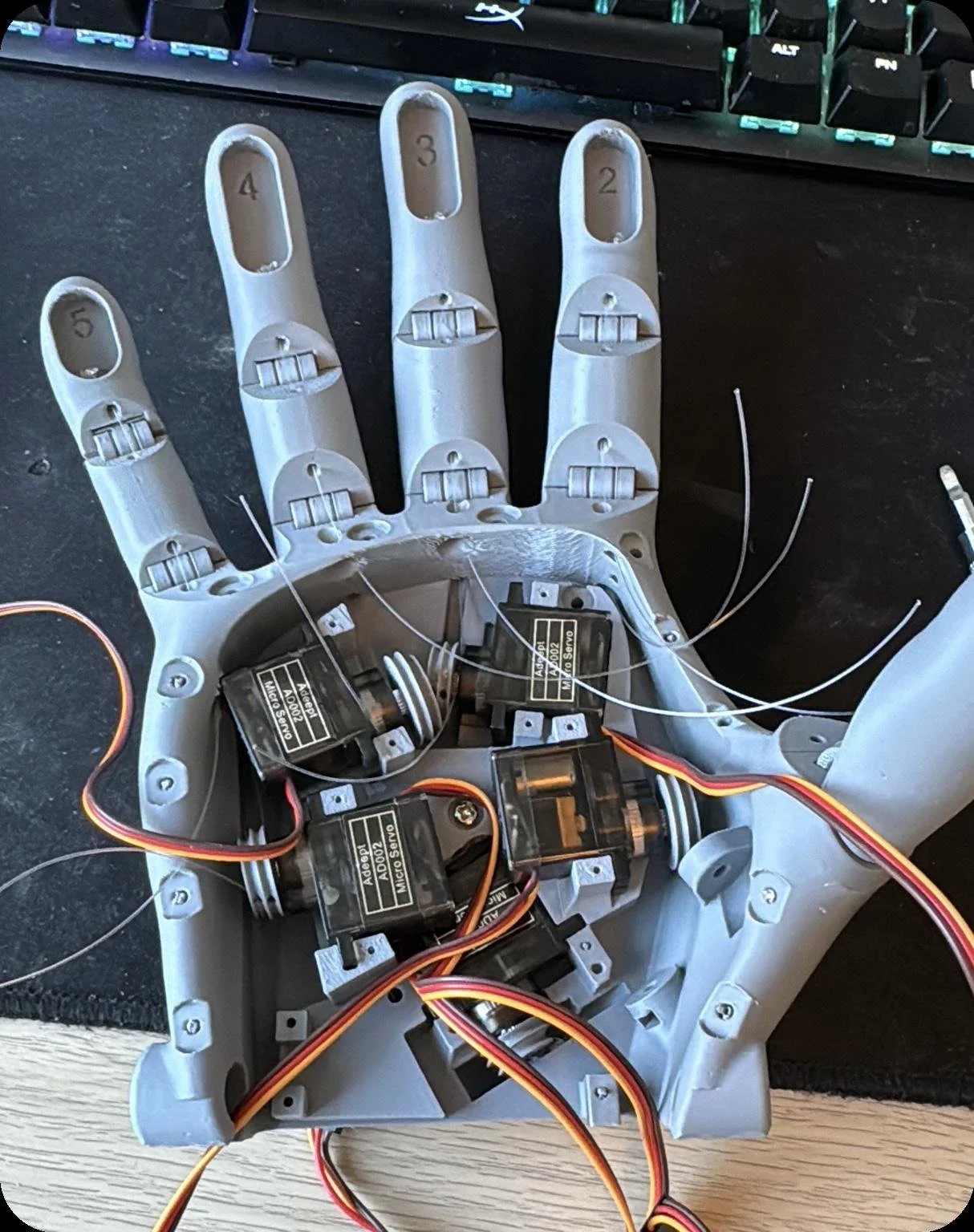
Internal channel runs the length of each finger to carry the tendon.
Ongoing design changes to improve precision
The tendons
Work like human tendons — anchored at the fingertip, running back through the finger.
Pull to curl, release to open; the finger springs back via [elastic / return tendon].
All tendons route down to the base, keeping the fingers purely mechanical.
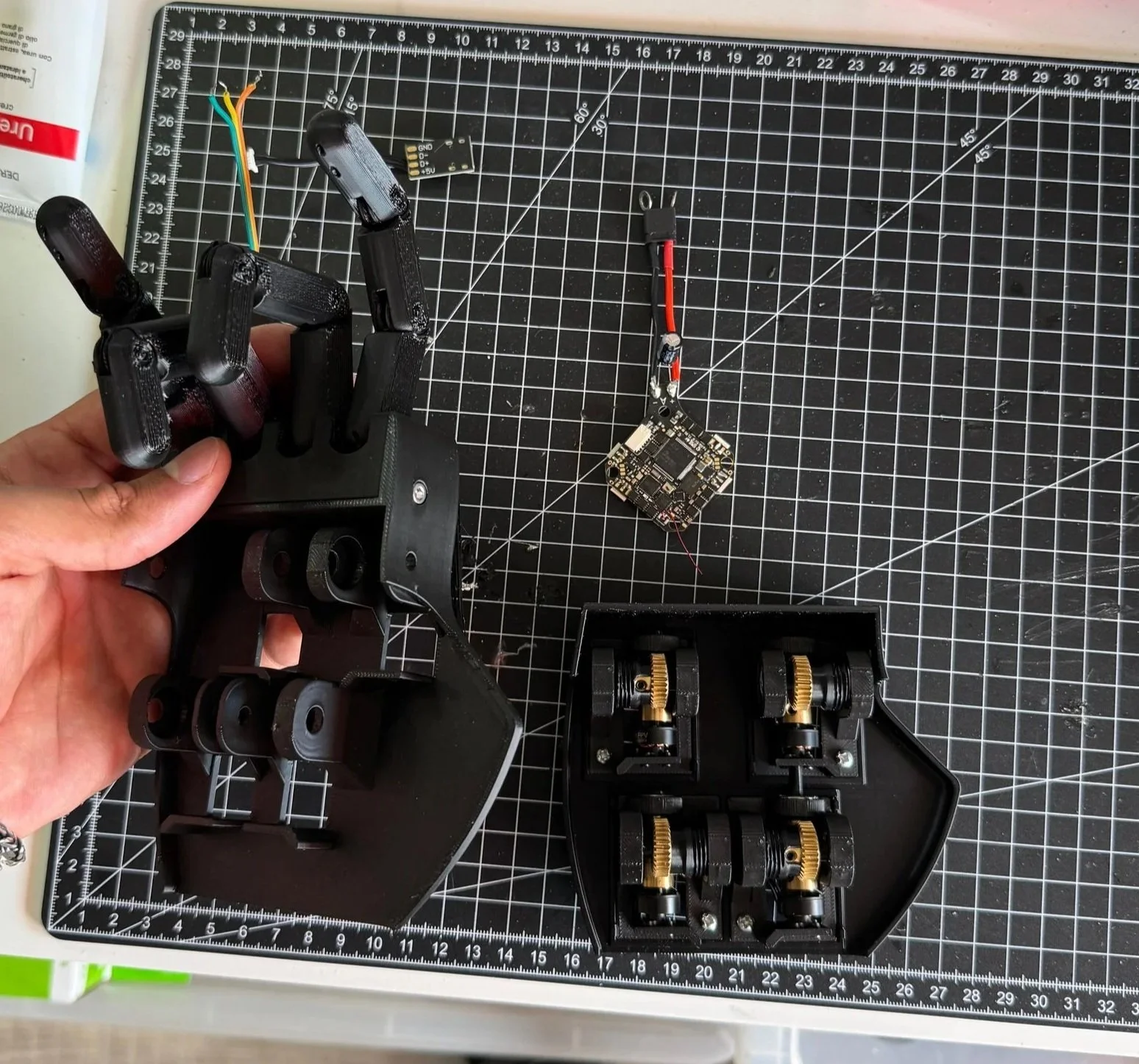
The drive — worm gears and motor
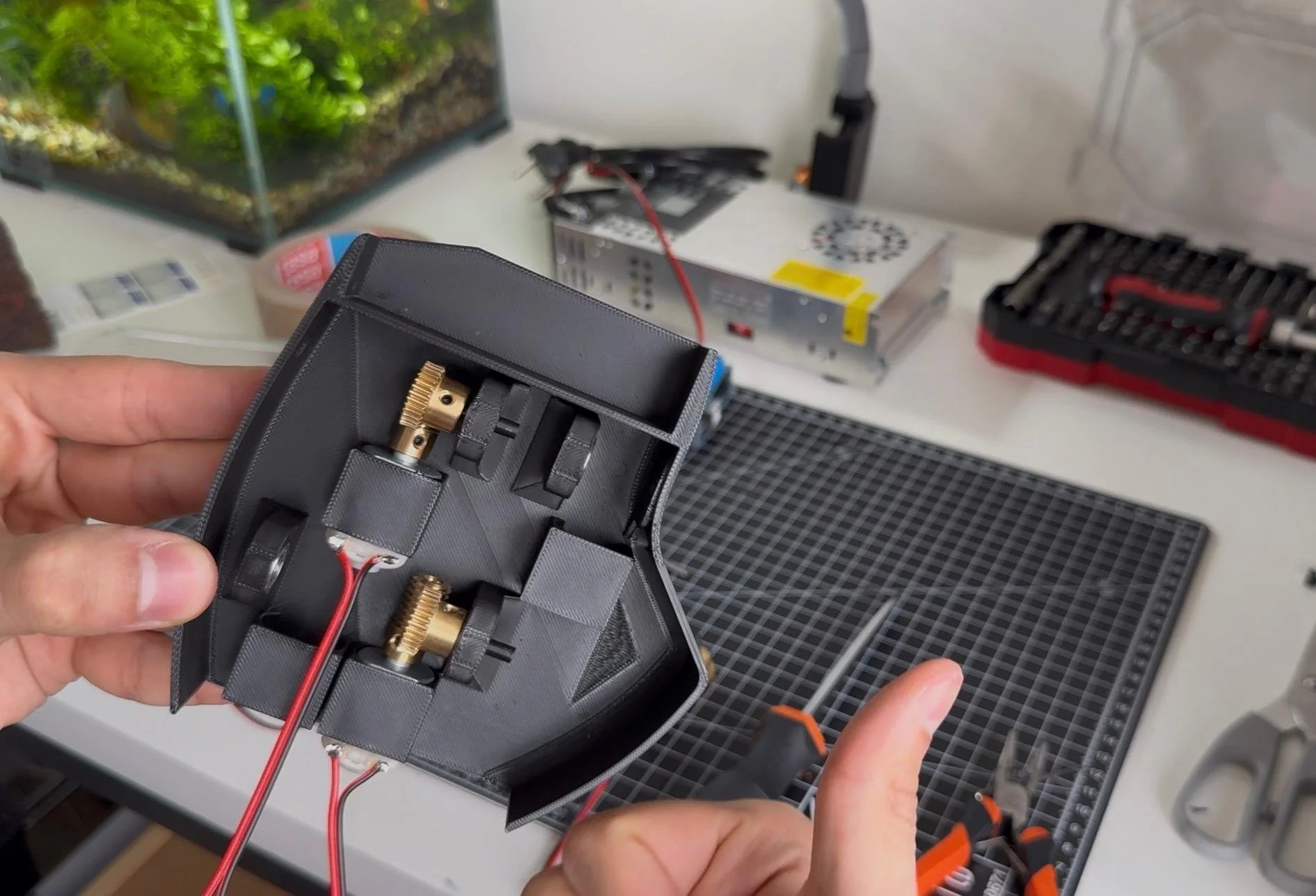
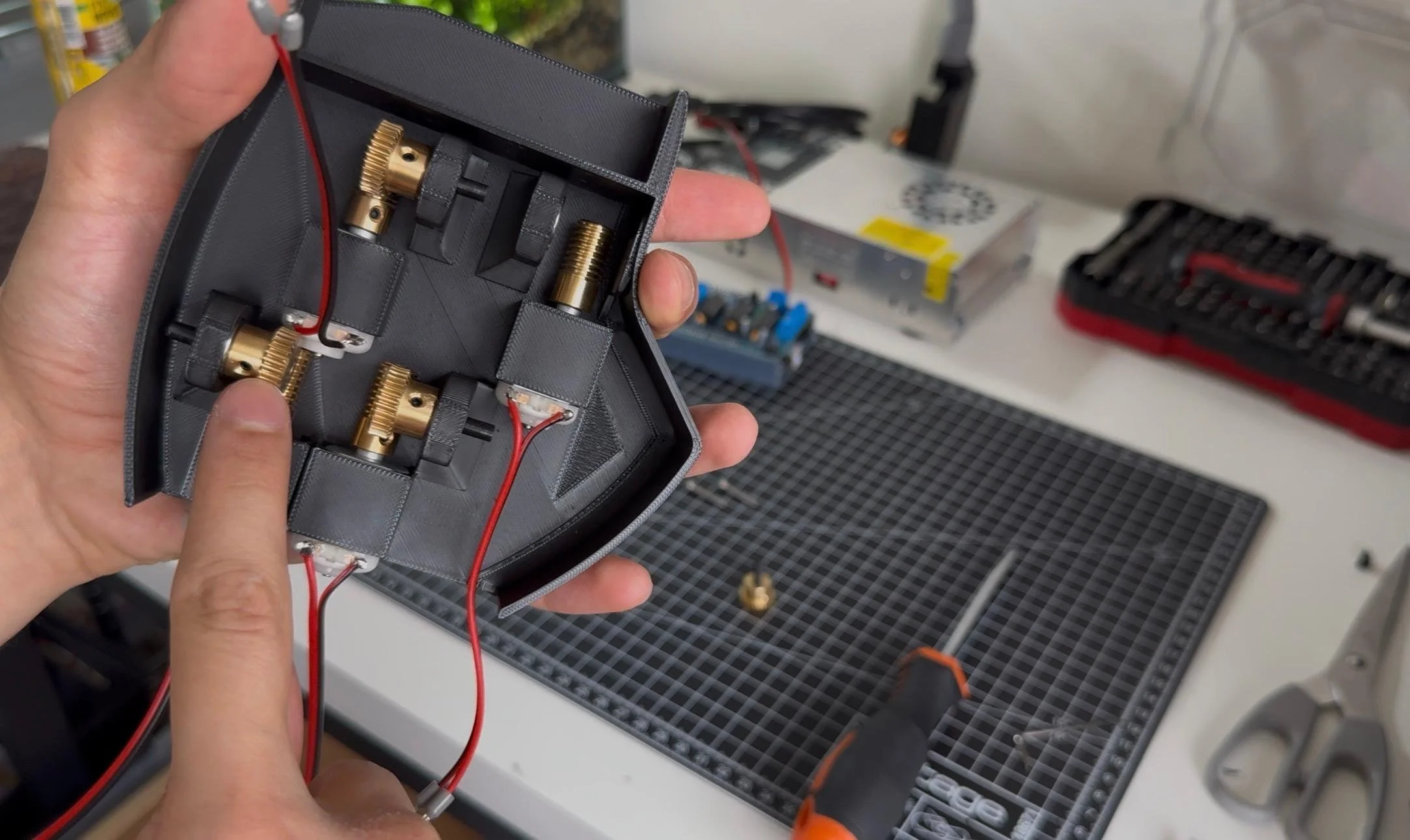
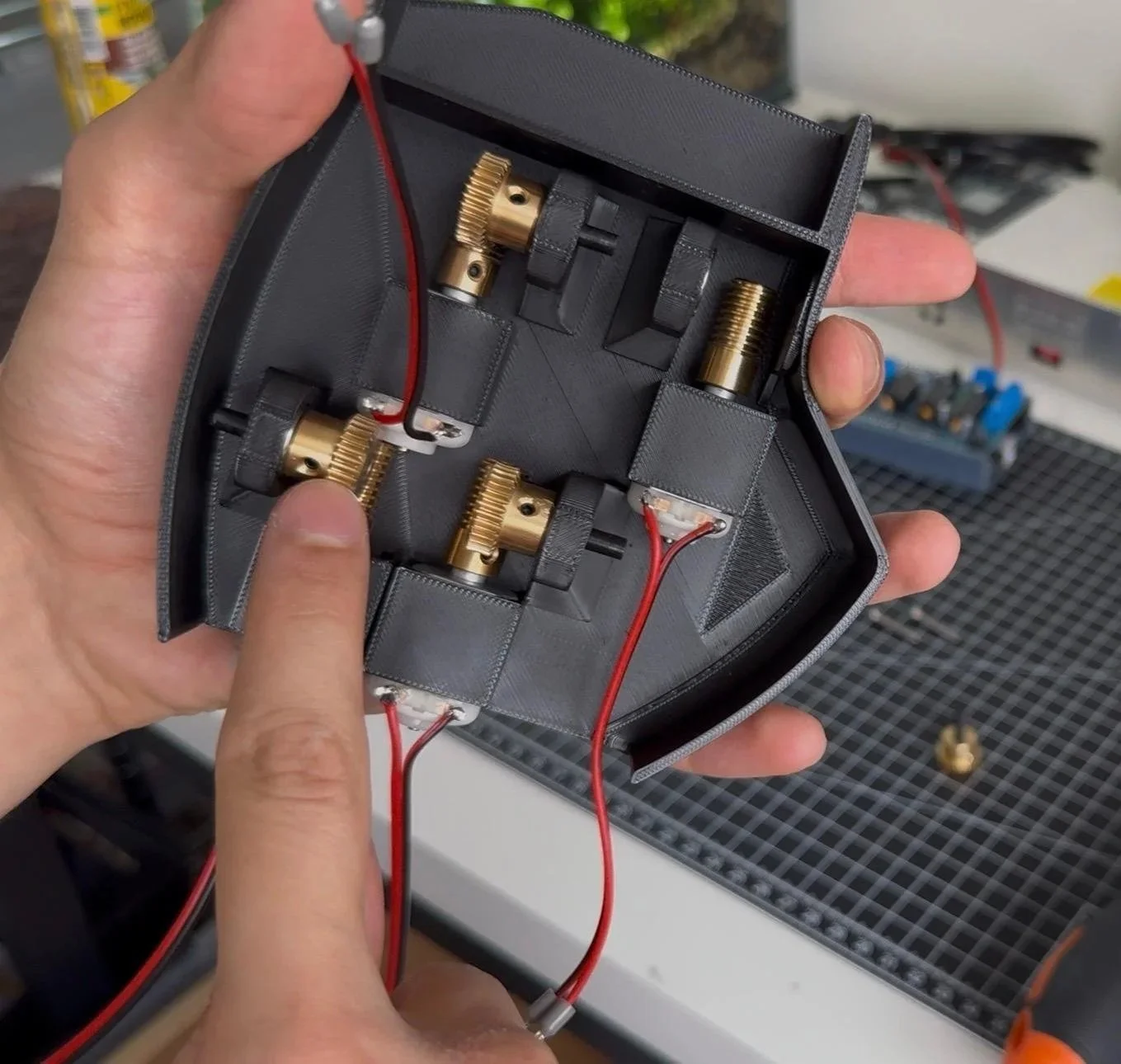
Each tendon is wound in by a worm gear — turn the worm, curl the finger.
Chosen because worm gears are self-locking: the grip holds with zero motor effort, since the output can't back-drive.
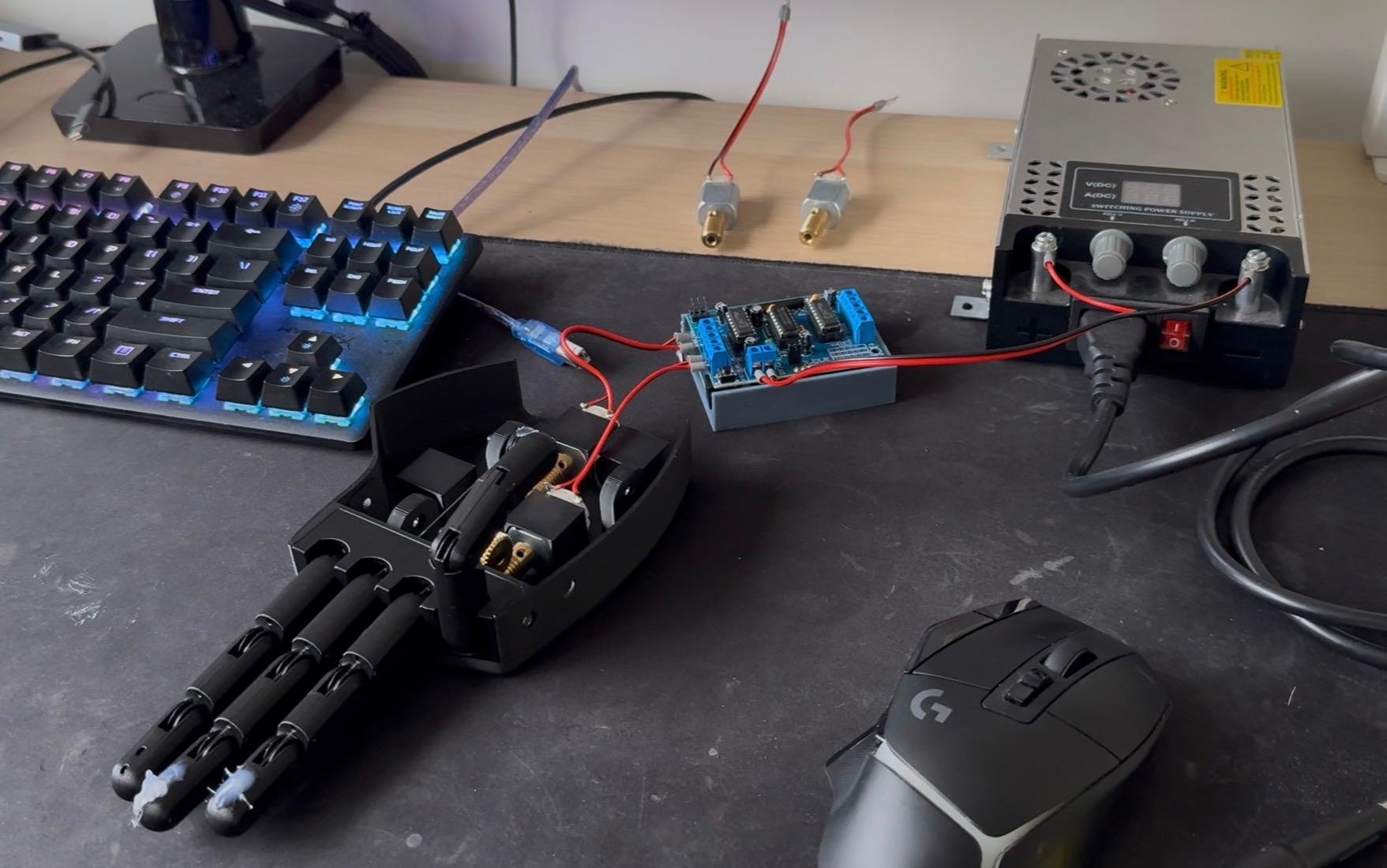
Tried spinning the worms with brushless drone motors DC motors — fast and complex vs cheap and simple
High RPM mini drone motors were the final call
The brain — Code and electronics
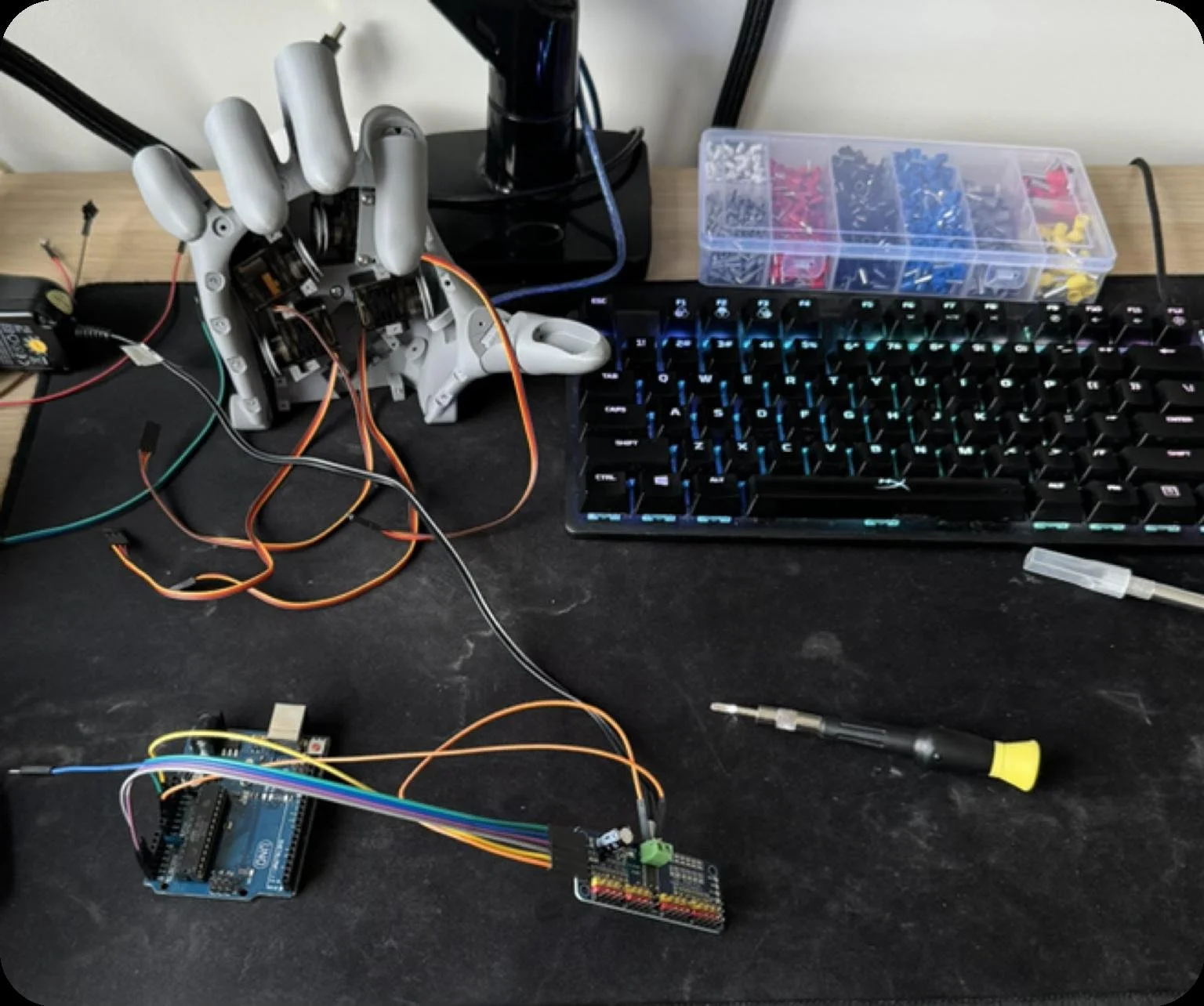
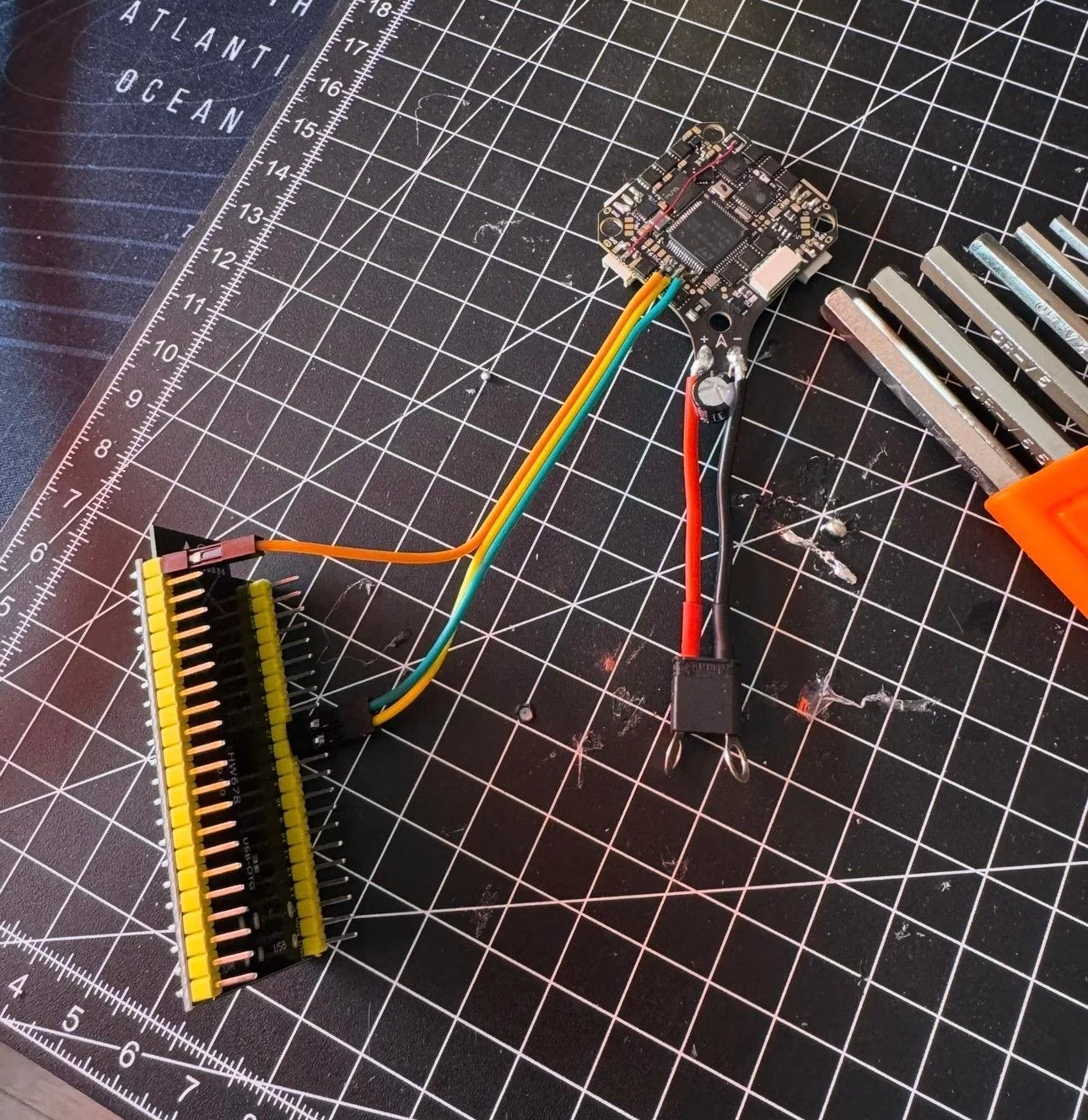
Brains: ESP32 running the finger logic and driving each worm-gear motor.
Motors driven through ESC so the board can control direction and speed.
Written in the Arduino IDE — code maps each input to a finger, spins its worm to a set travel, and holds.
Input: Flex-sensor glove / keyboard buttons tells the hand when to grip and release.