Sfera
Additive manufacturing—especially FDM printing—has become popular because it’s affordable, fast, and easy to use with materials like PLA+, PETG, and ABS. However, despite PLA being recyclable, most users still throw it away due to a lack of accessible recycling solutions.
This project aims to create a compact, affordable at-home filament recycling machine, similar in size and cost to a 3D printer, enabling users to reuse materials and reduce filament costs.

December 2023 - June 2024
UNDER CONSTRUCTION
Market Research
“How can we develop a cost-effective, user-friendly filament recycling system that aligns with the needs and budgets of 3D printing enthusiasts?”
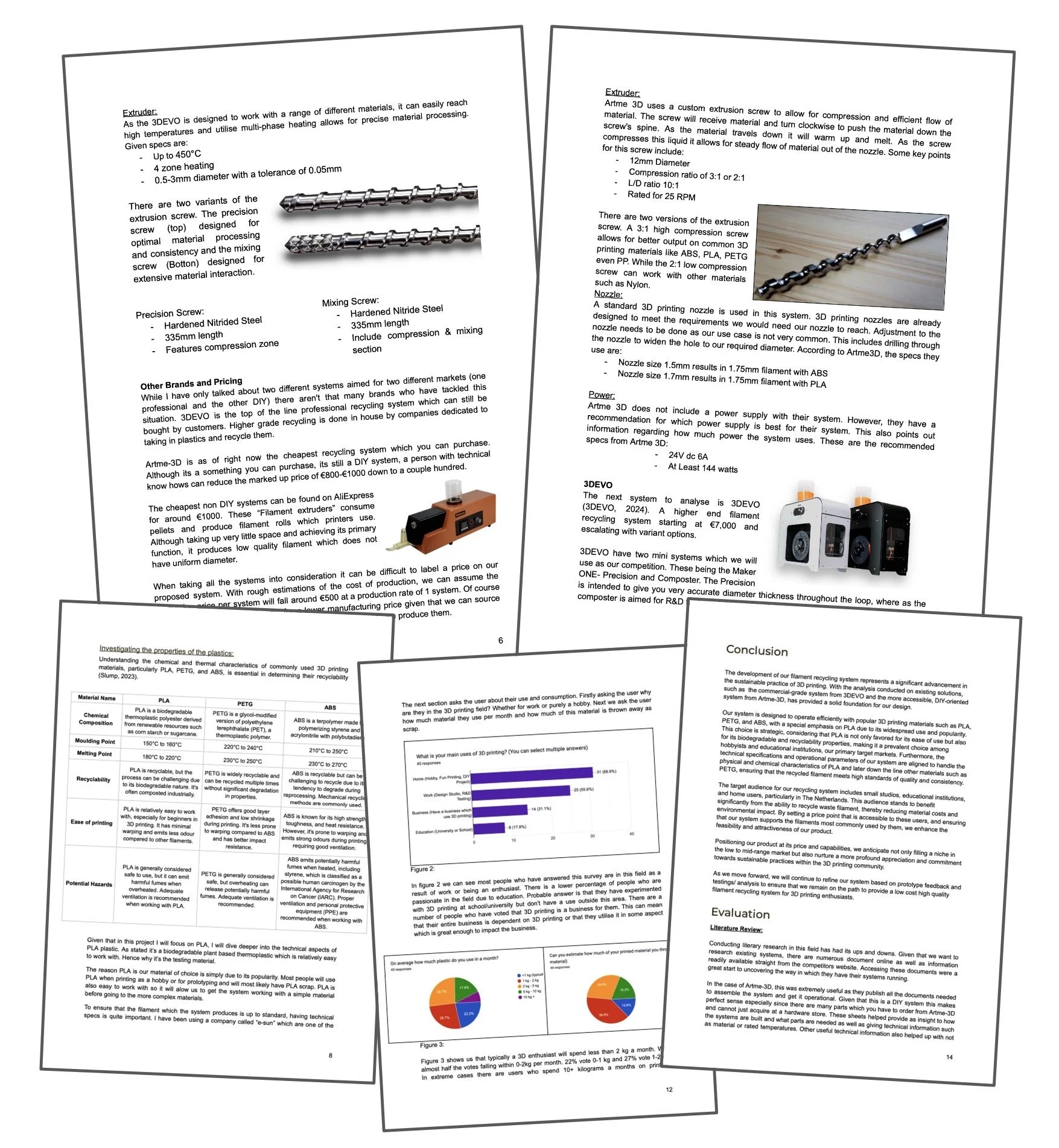
Research covers the existing filament recycling systems, in terms of how they are assembled, their price range, their level of quality as well as their target audience.
This goes into a breakdown of parts or techniques used in these system which are open knowledge and allows us to build upon already gathered research rather than rediscovering what is already known.
Investigation regarding the physical properties for the plastics which the system will use. As well as a breakdown of how PLA is made in the first place.
Conducted market research covering the potential target market such as educational institutes or hobbyists.
Ideation
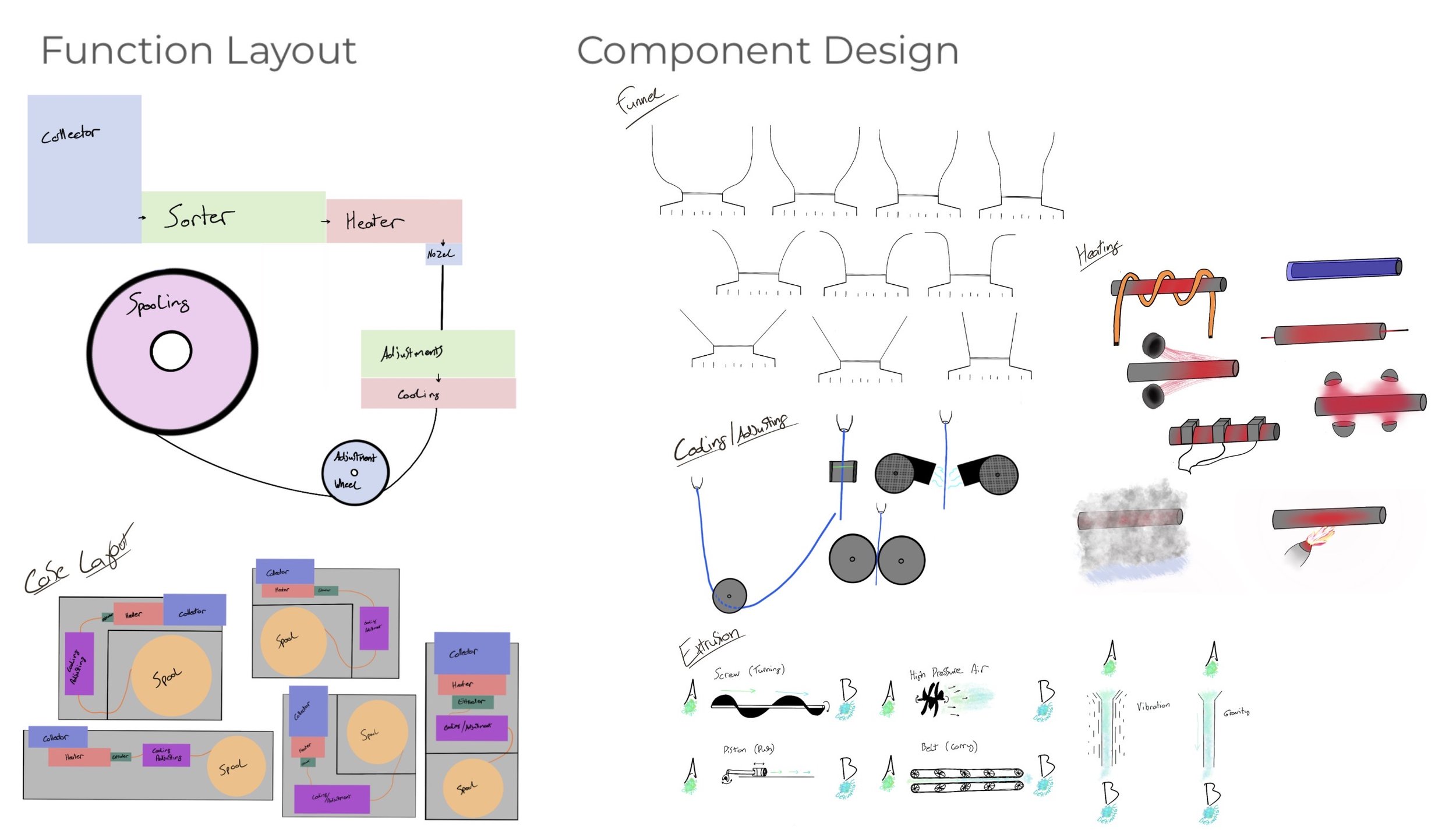
Idea generation starts with creating a functional layout. What’s components are needed in the system to achieve its function?
Once the Functional layout was made, brainstorming ideas on the individual components can start.
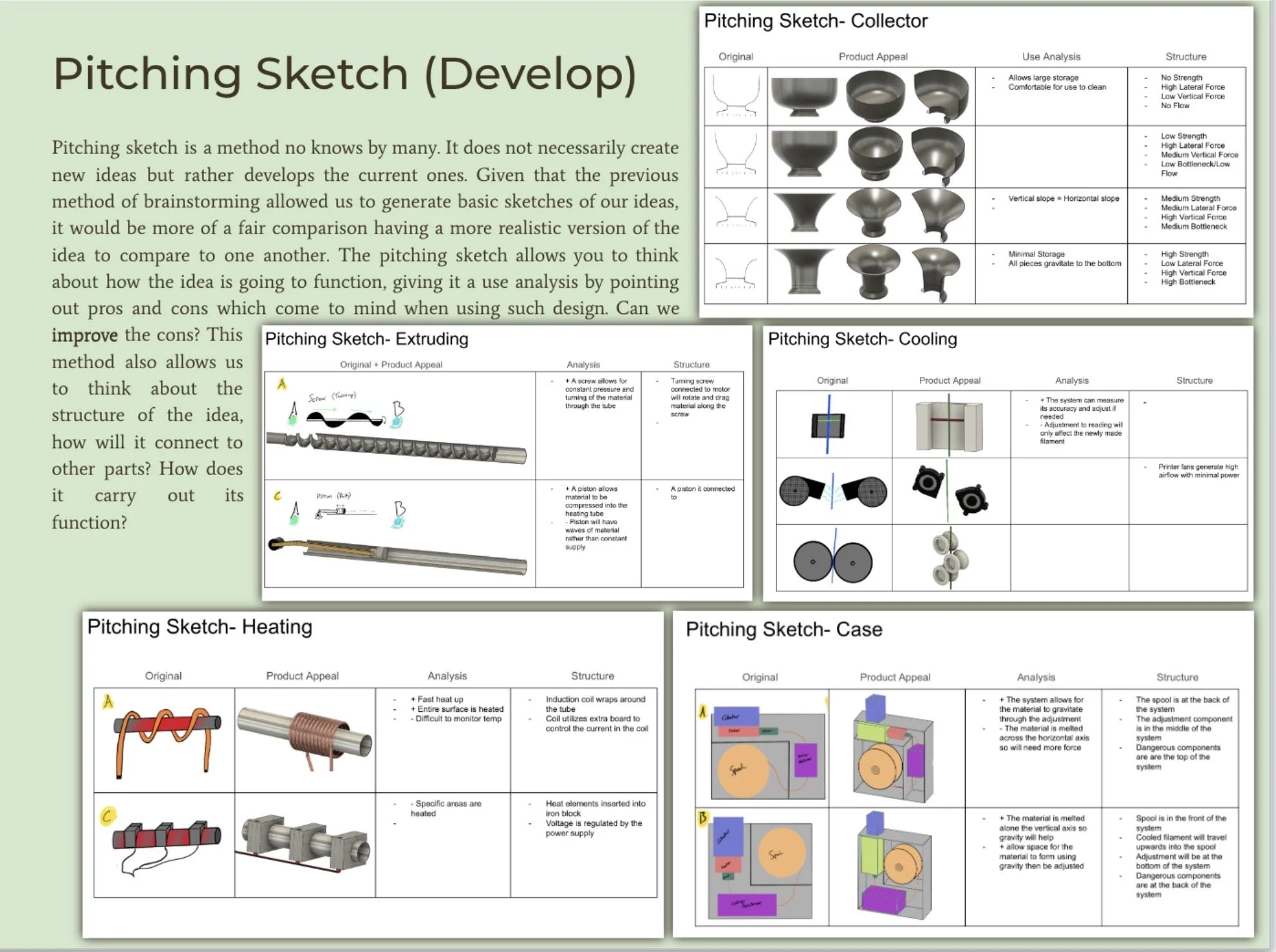
Taking Ideas from the initial brainstorm to a more developed idea required me arguing the up’s and down’s of each. Conducted by drawing a “better” draft of the idea and being critical to why this idea has some design decisions.
Testing different morphologies of each idea was a final way to see if I could find better solutions to ideas I had already chose. For example, I had chosen a funnel to me the depositiorty method of material into the system, to test which version of the funnel would work best I printed the different shapes and sizes and conducted tests to see which would have the best flow of material.
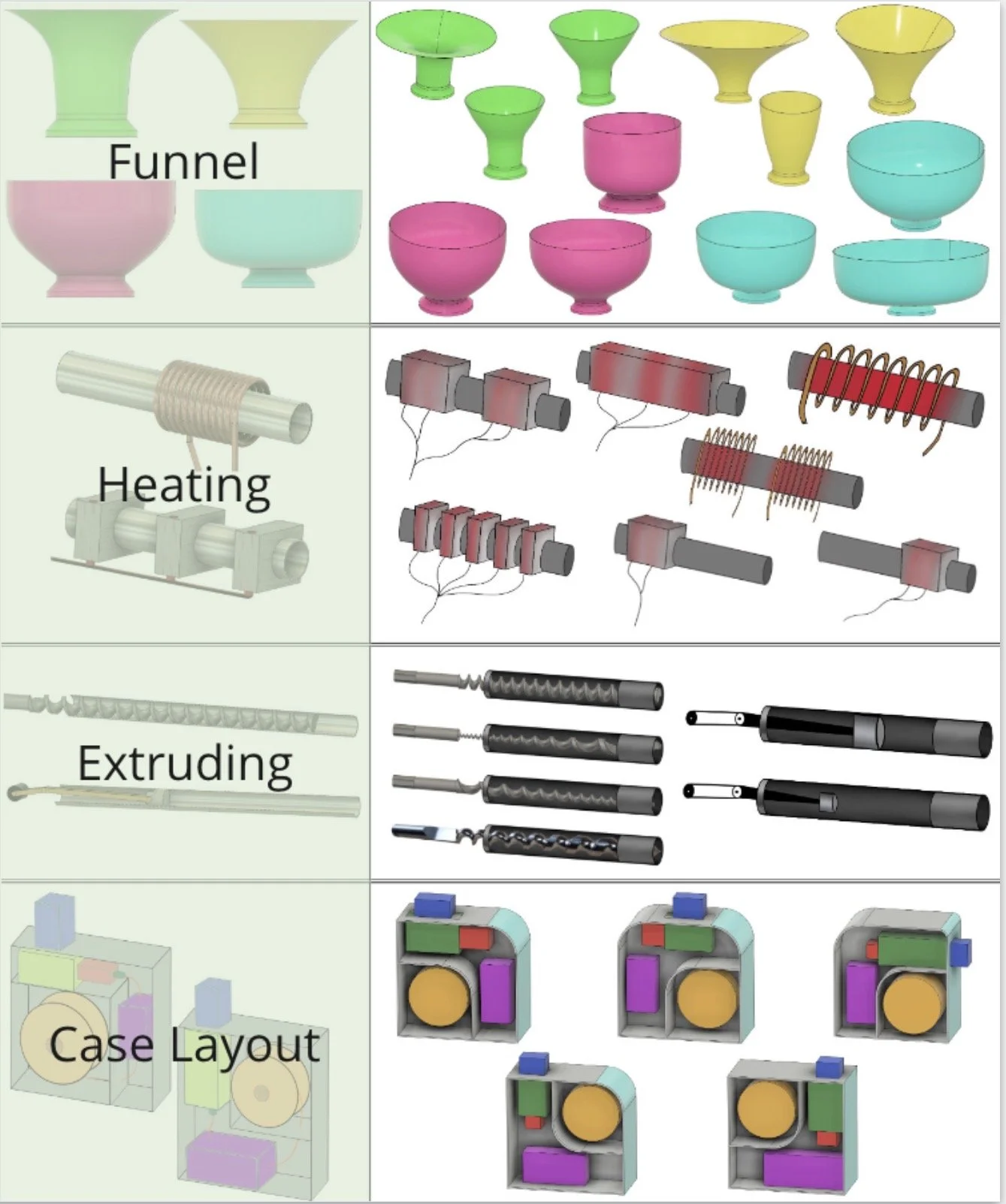
First Developed Idea
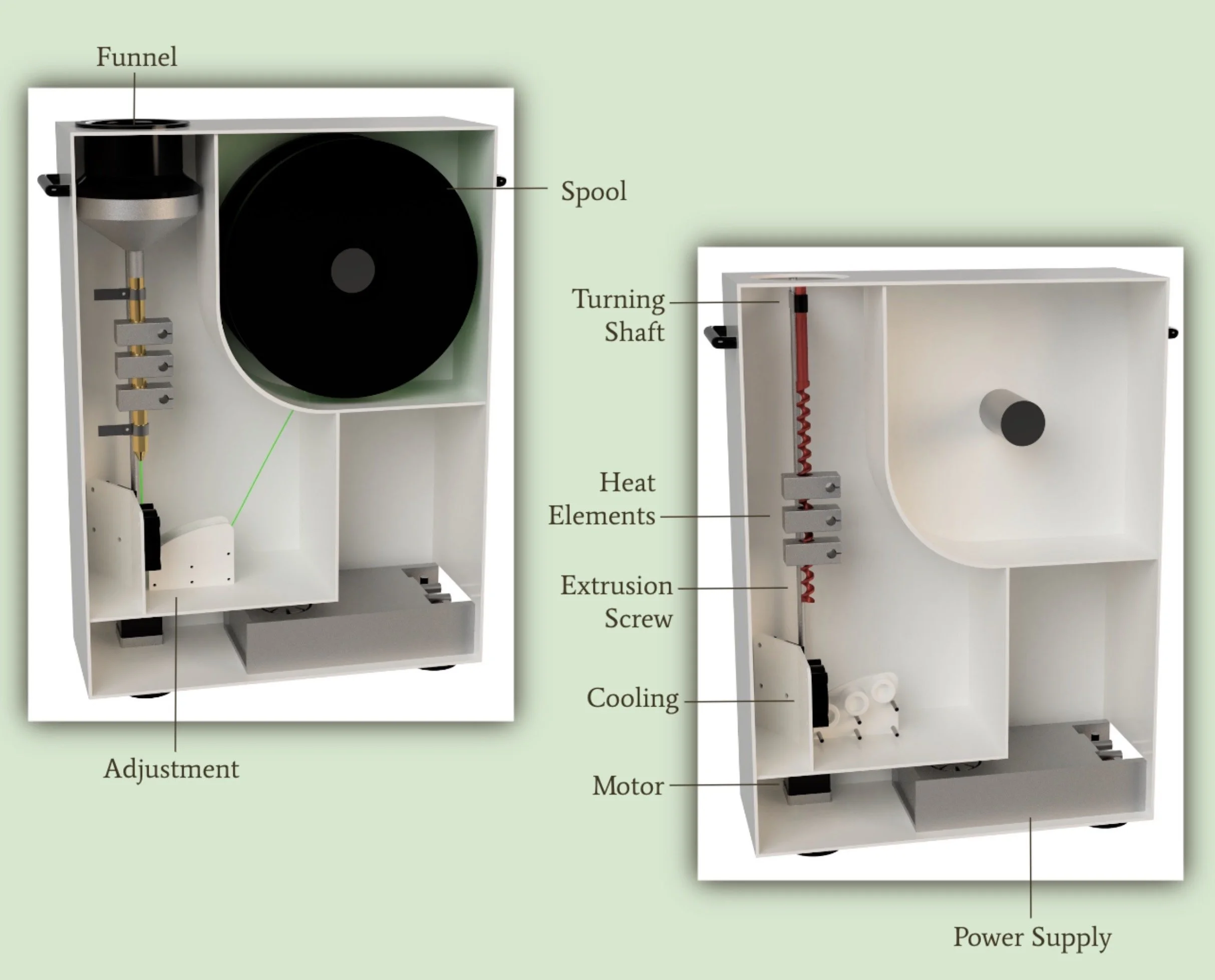
Component Breakdown
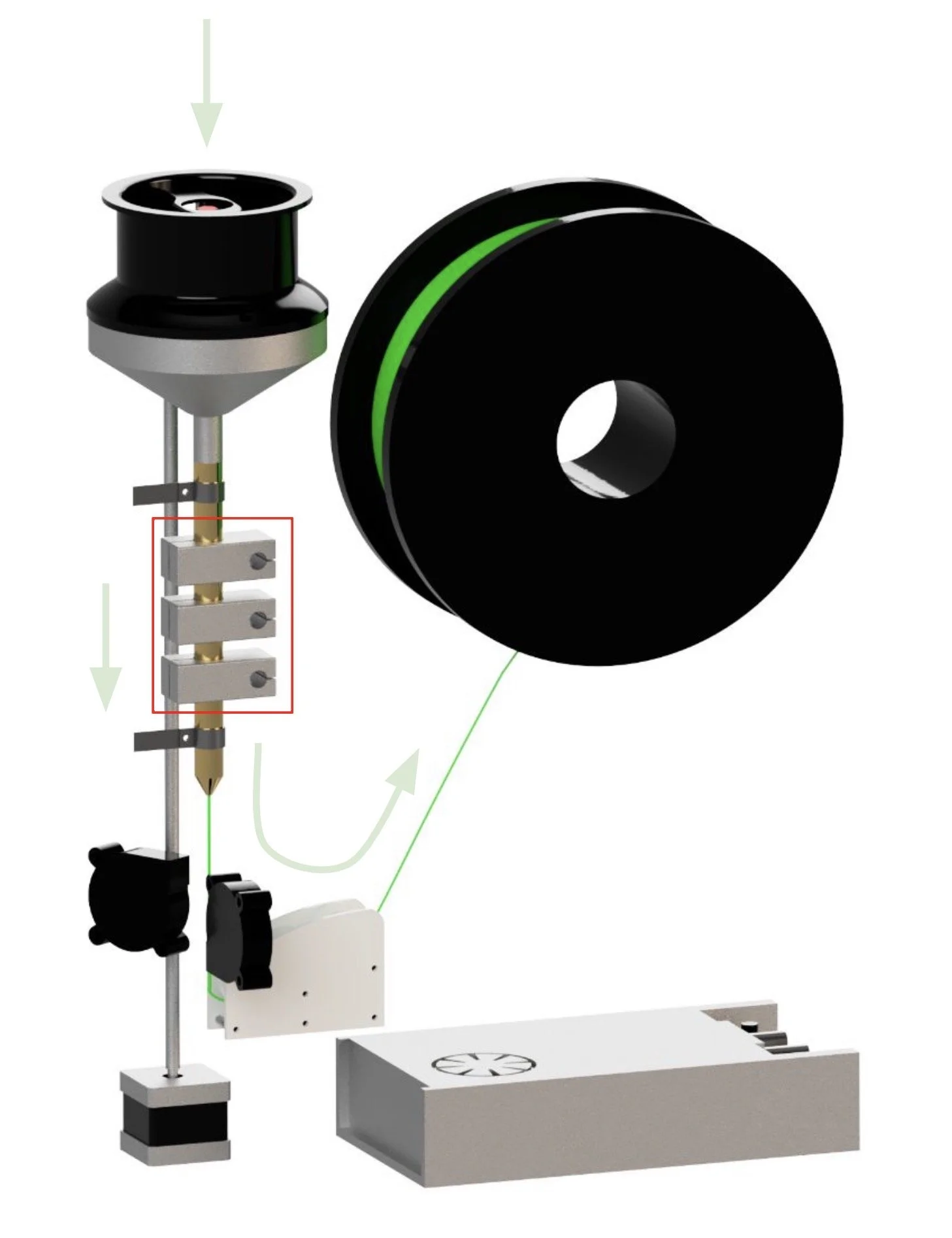
An assembled view of all components without the case gives an understanding of the flow of material is such a system.
Material enters the funnel, and it stored in the funnel
The extrusion screw will collect the material and wind it down the heating tube
Heat elements marked in red raise the internal temperature over 220ºC
The material is extruded from the 1.75mm nozzle below
The material is cooled with a pair of fans
The material travels up through adjustment wheels onto the spool